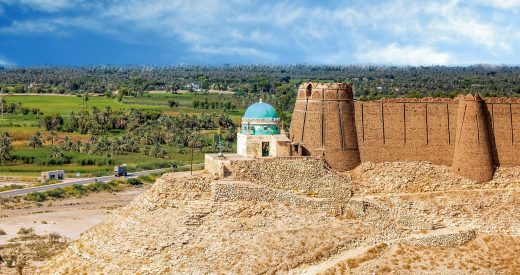
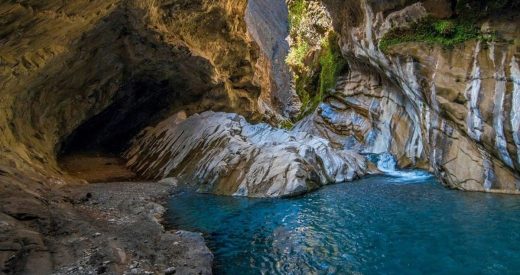
From the burning plains of Balochistan to the top of K2, the world’s second highest mountain, Pakistan is the link between the steamy subcontinent and the wild mountains of Central Asia. Four of the great mountain ranges of the world collide in the North and the scenary is matched by an eclectic collection of people and cultures.
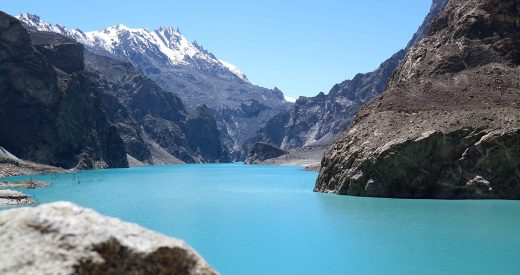
The mountainous north offers some of the most dramatic scenery on the planet, with towering peaks, glaciers, icy blue rivers, lakes, dense forests and endangered wildlife, along with a tapestry of different communities and ancient villages. Driving through the region along the world famous Karakoram Highway is always among the highlights on a visit to Pakistan, as is exploring the mountains by foot, along some of its beautiful trails.
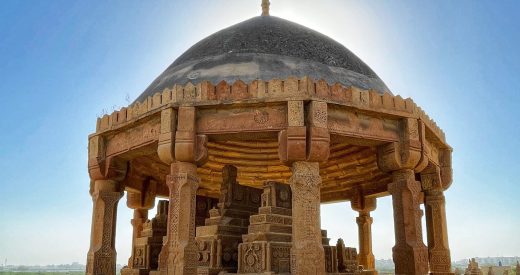
The country, however, offers much much more and its vibrant cities offer as much intrigue and fascination as the mountainous scenery in the north. From the historic Silk Road city of Peshawar, which still is a focal point of cross country trading today, to the ancient Mughal city Lahore, near the border with India. We travel right through the country on our trips, from the bustling city, Karachi, on the Arabian Sea, right up through the Indus Valley to the modern capital, Islamabad. The route was home to some of the earliest civlisations and offers a bounty of ancient sites, along with a wonderful tapestry of communities and all the vibrant sights, smells and sounds you expect from Pakistan.
We also venture to some of the lesser visited regions of the country, including the western province of Balochistan, bordering Iran and Afghanistan. This is still a part of the country which receives few international visitors, but has impressive national parks, beautiful beaches, ancient juniper forests and mountains, along with areas of harsh desert. You really feel like you’re going off-the-beaten track in this part of the country.
The beautiful sites and scenery in Pakistan are certainly things to marvel at, however, the incredible scenery takes second place in Pakistan, to some of the most hospitable and generous people in the world. Please contact us with any questions you may have.

Peshawar is our headquarters in Pakistan. The capital of the North West Frontier, just an hour from Afghanistan and only a short drive to the Tribal areas. The old city is a mix of the ancient and the modern. Mobile phone shops battle for space on the narrow streets next to ancient artisans selling textiles and jewellery. Storyteller Street contains tea shops that look like they and their owners haven’t changed since the days when Silk Road traders met and exchanged tales giving the street its name. Old Sikh meeting houses rub shoulders with mosques. Some are restored beautifully, some are in a state of disrepair. Peshawar is a great place to shop for souvenirs, rugs and carpets as much it is a great place to just sit and watch the world go by. The Peshawar speciality of Chapli kebab, basically a big greasy lamb burger, may not be to everybody’s taste but we are sure a cup of Kawa, sweet green tea, in an old city tea shop will suit everybody. Meat lovers will love the Tikka and Karai shops at Namak Mandi. Just order how many kilos of meat you want and whether you want it barbecued (tikka) or curried (Karai) and away you go.

The classic route to the subcontinent, the Khyber Pass has been used for invasion by everyone from Alexander the Great to the Persian Nadir Shah via Tamerlane, Babur and Mahmood of Ghazni. Of course, the British tried invading Afghanistan going the other way and twice ended up with a bloody nose. The winding road is flanked by forts belonging to the Khyber Rifles, the legendary military unit that guards the Pass. The road follows the old train line that is now sadly falling into disrepair. Please contact us for more information about the Khyber Pass

Long cut off from the rest of Pakistan and the world, the Chitral valley even today can only be reached by road for six months of the year. Even flying in is precarious as flights have to cross the mountains of the Hindu Kush. Chitral the town is set on a river at the foot of Tirich Mir, the highest peak in the Hindu Kush. It remained a princely state until 1969 when it was absorbed into Pakistan’s North West Frontier Province. The Princes still retain a large influence in the region. Chitral Fort was the scene of a famous British victory when a small force withheld a seven-week siege during the winter of 1896 before a relief column battled through the snow-covered Shandur Pass to relieve them. Chitral is a beautiful town in its own right and a perfect jumping off point to the magical Kalash Valleys. Lowari pass if one of two open to tourists entering Chitral. It can only be traversed by vehicles for 6 months of the year. In May when the snow recedes it often reveals the remains of those who perished trying to pass on foot during the winter. The ride on the Chitrally side involves 42 hairpin bends as the road snakes down an incredibly steep road. Crossing the Lowari pass may not be a smooth ride but it is surely exciting.

The roots of the Kalash people are steeped in myth and legend. Many claim they are descended from the armies of Alexander the Great although it’s possible this is a more recent myth dreamed up by a Greek NGO worker. At one time their ancestors ruled all the way from the Panjshir Valley, north of Kabul, to Swat and Chitral in a land known as Kafiristan – literally the Land of the Unbelievers. It was here that Rudyard Kipling set his famous short story, The Man Who Would Be King. But when Afghanistan’s eastern border was finally agreed upon in 1893 – cutting right through Kafiristan – the Amir of Kabul seized the opportunity to invade the land on his side of the border, convert the infidels and change its name to Nuristan – Land of Light. In what was probably the last forced mass conversion in history, Kafiristan was reduced to the lands of the Kalash. Surrounded by an ocean of Islam the Kalasha still worship their ancestral gods and hold colourful religious festivals of music and dance They drink wine, sacrifice animals and, even though the men now wear the standard Pakistani Shalwar Kameez, the women still dress in traditional garb; black dresses tight round the waist with thick red belts, flamboyant head-dresses made of wool decorated with cowry shells, old buttons, beads and bells and, perhaps most striking of all, around their necks great strands of coloured beads. The Kalash divide the summer months between herding their goats in the high pastures and tending their crops of wheat and maize in the valleys. Apricots, mulberries and walnuts are harvested and dried for winter while the grapes are made into wine. Several of our itineraries arrive in the Kalasha valleys in time to witness one of their traditional festivals. This is a great time to see the Kalasha traditions at their best. We have many friends amongst the Kalasha and ensure that our impact on their way of life is kept to an absolute minimum.

The Shandur Pass is the second route into Chitral. As with the Lowari Pass, it is open only six months of the year and is a thrilling if slightly uncomfortable ride. In July every year, the barren pass turns into a festival when Gilgit take on Chitral at freestyle polo. The rules are reputed to be 800 years old and the competition is as brutal as it is skilful. People come from all over Pakistan and the world to the three-day festival that sees various teams face each other during the day followed by music, dancing and optional drinking local moonshine in the evening.

Thought to be the inspiration for the mythical Shangri La of James Hilton’s Novel “Lost Horizons” and more recently of “Spirited Away”‘s director Hayao Miyazaki’s animated film “Nausicaa of the Valley of the Wind”. The Hunza valley has been astounding those that have managed to make it here for centuries. Until recently the valley could only be accessed by foot and only with the arrival of the KKH did Hunza become anything less than a formidable challenge to reach. Legend has it that this isolation led to the inhabitants living extremely long lives and even now most local people swear that their grandparents lived until at least 100. Until 1974 it was an autonomous princely state before being absorbed into Pakistan. The Mir of Hunza is now an elected leader rather than a hereditary one. The valley is surrounded by some incredible snow capped peaks. Rakaposhi, Ultar and Ghentar peaks all top out over 7000m and the incredible Bublimating (Ladyfinger Peak) rises so steeply that no snow can stick to it. We stay at the Eagles Nest Hotel that offers the best views of all of these mountains and the valley and conduct walks along the ancient irrigation channels that long ago changed this barren valley into the lush oasis it is now.

A.K.A the KKH, the road took 20 years to build and was only completed in 1986. It is often described as the 8th wonder of the world and stretches over 1300km from Kashgar in China to Islamabad in Pakistan. It passes through some simply stunning landscape on a road that is nothing short of an engineering marvel. Whether it is passing within metres of huge glaciers, crossing over bridges or overlooking deep drops into the valley below, a ride on the KKH is always interesting.

Everywhere in Northern Pakistan you will find Pakistani tourism board posters of the view of Nanga Parbat from Fairy Meadows. The jewel of Pakistan tourism is rightly famous. From the Karakorum Highway it is a 90-minute bowel-emptying jeep ride up a road clinging to the side of the valley, built entirely from dry stone cantilever bridges without cement or modern building materials. Then it is a 2 hour hike up to a small pine covered valley and the Fairy Meadows campsite and some huts for those who don’t like to camp or are part of an Untamed Borders trip. From there you can view the Raikot glacier and Nanga Parbat, the Killer Mountain. At 8125m it is the worlds 9th highest mountain and the only 8000+ metre peak that you can walk to the base camp of in one day. It marks the western end of the Himalayas in impressive style. In the late 1930’s Heinrich Harrer came here to climb but he was imprisoned by the British before escaping to Lhasa for his “7 years in Tibet”. Due to its relatively southern position in the Himalayas it suffers from unpredictable weather during the monsoon. Combined with numerous avalanches it has a fearsome reputation in the climbing community. The mountain’s Rupal face is the world’s longest continuous mountain face in the world, stretching to a height of over 4500m.

The hike to Concordia is possibly the most spectacular in Pakistan, a country not short of incredible mountain scenery. The route we take follows a 14-day round trip trek through uninhabited areas. Much involves walking and camping on the Baltoro glacier, at 62km long one of longest outside of Antarctica. As you pass up the glacier you will pass incredible rock formations like the Trango Towers, the world’s highest cliff faces, and the Cathedrals. Despite this these giant mountains seem small at Concordia where 4 glaciers converge and seven of the worlds 25 highest mountains come together in the greatest concentration of high mountains on earth. The Gashumbrums 1-4, Broad Peak and K2 all tower in the space of 20km on the Chinese-Pakistan border. K2 has is known as the mountaineers’ mountain. When viewed from Concordia it rises like a giant pyramid of rock and snow. The world’s second highest mountain, it is less climbed than Everest but comes with a fearsome reputation. In 2008, 11 climbers died after an avalanche left them stranded at over 8300m. Any trip we organise allows a couple of days for visits to the base camp of K2 and Broad Peak before crossing the Gondogoro Pass (5900m) to return to civilisation. The walking is strenuous and the walkers will need to be in good shape but most of the altitude gain is gradual. Please contact us for a full supported trip with experienced guides.

The sparsely inhabited mountain and desert province of Balochistan makes up the south west region of Pakistan. The Makran Coastal Highway follows in the steps of Alexander the Great, allowing travellers to explore the coast of the Arabian Sea. Along the way is Hingol National Park, Pakistan’s largest, which stretches from desert to mountain. Within its boundaries are forests and swamps of the river Hingol with crocodiles and vast flocks of migratory birds as well as dramatic rock formations. Inland is the spectacular Bolan pass, the southern counterpart of the Khyber, that links the Indus valley to the provincial capital at Quetta. Famed for the nut and fruit orchards, the local speciality is lamb Sajji, whole joints roasted on spits and served rare with the local bread.

Lahore is one of Pakistan’s most liberal and cosmopolitan cities with a rich Sikh and Mughal heritage. The city is a vast teeming metropolis with the Fort, Badshahi Mosque and Shalimar Gardens standing as living reminders of the Mughal era. It is regarded as Pakistan’s city of culture and it easily lives up to this reputation. Whether it be visiting the colonial museum, starting point of Rudyard Kipling’s “Kim”, or listening to devotional Qawalli or mystical Sufi music we can point you in the right direction.

Taxila was a major centre for both Hindu and Buddhist teaching from the 5th century BC to the 6th century AD. The area surrounding the modern town of contains more than a dozen archaeological sites containing Buddhist stupas and remains of monasteries and cities. For many the highlight of their visit to Taxila is the small museum which contains fine examples of Greco-Buddhist art; arguably the original East/West fusion when classical Greek sculpture style met Buddhist iconography.
Takht e Bhai (throne of water) is a Buddhist temple complex that dates back to the 1st century BC. It is named after the nearby natural spring still used by the inhabitants of the area. Like both the Buddhas of Bamian and the remains at Taxila, Takht e Bhai was part of the great Gandharan Empire. The UNECSO World Heritage complex is well maintained with the monastery being particularly well preserved. It offers superb views down onto the plains of Peshawar and the Indian subcontinent beyond, the same as silk road traders were greeted with when they finally finished crossing the mountains of Central Asia. Tahkt e Bhai is just one of many Buddhist remains in Northern Pakistan and we can arrange a specific trip to see crumbling stupas, edicts from kings engraved in rock and giant buddhas carved high on cliff walls. Contact us for further details.

Pakistan’s capital was only designed and built in the 1960’s. It does not have any history and for many the grid layout and wide boulevards are more reminiscent of a US suburb than the sub continent. None of our itineraries hang around too long here but if you are after a few home comforts after a trip to the wilds of the North or to Afghanistan we know where you can get a steak, a beer or even a visit to Pakistan’s only anti-fascist ice cream parlour!!
Most visitors to Pakistan require a visa before arrival. Fortunately, Pakistan's visa process has become significantly easier in recent years, with many nationalities now eligible to apply online through Pakistan's e-visa system.
Tourist visas are generally issued electronically, with applicants submitting passport details, photographs and supporting documents online. Processing times vary, so we recommend applying several weeks before departure.
Travellers joining Untamed Borders tours to Pakistan often receive assistance with visa documentation and supporting paperwork where required.
If you have any questions regarding visas for Pakistan, please contact us at info@untamedborders.com.
The best time to visit Pakistan depends on where you plan to travel.
Northern Pakistan, including Hunza, Skardu, Chitral and the Karakoram Highway, is generally best between May and October. Spring brings wildflowers and snow-capped peaks, while autumn offers clear skies and spectacular mountain colours.
Punjab, including Lahore and Islamabad, is most pleasant between October and March, when temperatures are cooler and ideal for sightseeing.
Karachi, Sindh and much of Balochistan are best visited during the winter months from November to February when temperatures are far more comfortable, rather than the scorching heat of summer. Southern areas can regularly reach more than 40°C over the summer months.
Most travellers arrive in Pakistan via the international airports of Islamabad, Lahore or Karachi. There are regular flights from Europe, the Gulf, Central Asia and Southeast Asia.
Pakistan can also be entered overland through several international border crossings:
For travellers interested in overland journeys, Pakistan remains one of Asia's most fascinating crossroads.
Safety is naturally one of the most common questions we receive regarding travel to Pakistan.
The reality is that conditions vary considerably across the country. Most visitors spend their time in Lahore, Islamabad, Hunza, Skardu, Chitral and along the Karakoram Highway, all areas that have seen growing tourism numbers in recent years.
One reason northern Pakistan has traditionally been welcoming for travellers is its strong local communities and ethnic diversity. Regions such as Hunza, Gilgit and Chitral are home to distinct cultural groups with long traditions of hospitality and relative religious tolerance. Many travellers are surprised by how safe and welcoming these regions feel.
As with travel anywhere, it is important to stay informed and seek current advice. Untamed Borders continually monitors conditions and adjusts itineraries where necessary.
Pakistan is a conservative country and modest clothing is recommended.
Women should wear loose-fitting clothing that covers the shoulders, arms and legs. A headscarf is not usually required in major cities but is recommended when visiting rural areas and religious sites.
Men should avoid shorts and opt for lightweight trousers and shirts.
In the mountains, temperatures can fall dramatically, even during summer, so warm layers are essential.
Cash remains king in Pakistan.
While some hotels, restaurants and larger businesses accept cards, particularly in Islamabad, Lahore and Karachi, many smaller establishments operate on a cash-only basis.
ATMs are widely available in major cities and towns. US Dollars are the easiest foreign currency to exchange, although other major currencies can often be exchanged in larger cities.
The local currency is the Pakistani Rupee (PKR).
Pakistan is one of the most linguistically diverse countries in Asia.
Urdu is the national language and English is widely spoken in business, government and education. Punjabi is the most widely spoken first language, while Pashto, Sindhi, Balochi and Saraiki are also major regional languages.
Northern Pakistan is particularly remarkable from a linguistic perspective. The mountains of Gilgit-Baltistan, Chitral and the upper Indus Valley form one of the most linguistically diverse regions on Earth. It is not uncommon for neighbouring valleys to speak entirely different languages that are not mutually intelligible.
Languages spoken in the north include Shina, Burushaski, Wakhi, Khowar, Balti and several others. Burushaski is especially famous among linguists as a language isolate, unrelated to any other known language family.
Internet access has improved significantly throughout Pakistan.
Major cities generally enjoy reliable 4G coverage and widespread Wi-Fi access. Most hotels, guesthouses and cafés provide internet access.
In remote mountain areas, particularly in Gilgit-Baltistan and parts of Chitral, connections can be slower or intermittent, and some valleys may have limited coverage.
Pakistani cuisine is one of the highlights of any visit and varies enormously between regions.
Punjab is famous for rich, heavily spiced dishes such as chicken karahi, mutton karahi, biryani, nihari and a huge variety of barbecue dishes.
Lahore is widely regarded as Pakistan's culinary capital and offers some of the best street food anywhere in South Asia.
Karachi's food scene reflects influences from across Pakistan and beyond. Visitors should try Beef Nihari, bun kebabs, seafood dishes and the city's famous late-night food markets.
Peshawar is known for excellent grilled meats, chapli kebabs and traditional Pashtun cuisine. One local favourite is takatak, a spicy dish prepared on a large iron griddle using chopped meat, tomatoes and spices.
In the far north, the cuisine becomes noticeably different. Dishes are generally milder and often show influences from neighbouring Central Asia, China and Afghanistan. Expect hearty meat stews, homemade breads, yak products, dumplings and simple mountain cuisine designed for life at altitude.
No trip to Pakistan is complete without trying chapli kebab, karahi, nihari, biryani, seekh kebab and traditional mountain dishes in Hunza or Chitral.
Pakistan is a predominantly Muslim country, with the majority of the population following Sunni Islam and a significant Shia minority.
The country is also home to Sikh, Hindu and Christian communities, alongside smaller religious groups.
In the remote valleys near Chitral live the Kalasha people, whose unique polytheistic belief system and traditions make them one of the most distinctive cultural groups in South Asia.
Pakistan: A Hard Country – Anatol Lieven
Still one of the best introductions to understanding Pakistan's politics, society and history.
The Reluctant Fundamentalist – Mohsin Hamid
A modern Pakistani classic exploring identity, globalisation and contemporary Pakistan.
In Other Rooms, Other Wonders – Daniyal Mueenuddin
A beautifully written collection of stories set in modern Pakistan.
The Wandering Falcon – Jamil Ahmad
A classic novel set among the tribal societies of the Pakistan-Afghanistan borderlands.
Empire of the Indus – Alice Albinia
A fascinating journey along the Indus River and through the cultures that have shaped Pakistan.
Son of a Lion
An award-winning film shot entirely on location in the tribal areas south of Peshawar using local actors.
Joyland
Pakistan's internationally acclaimed and award-winning contemporary drama.
Dukhtar
A powerful road movie set in northern Pakistan featuring spectacular mountain scenery.
The Cup
A documentary-style film offering insight into life and culture in modern Pakistan.
Pakistan: Hidden Kingdoms of the Himalaya
A superb documentary introduction to the landscapes and cultures of northern Pakistan.